Blog
Rash Guard Guide: Fabric, Fit and IBJJF No-Gi Rules

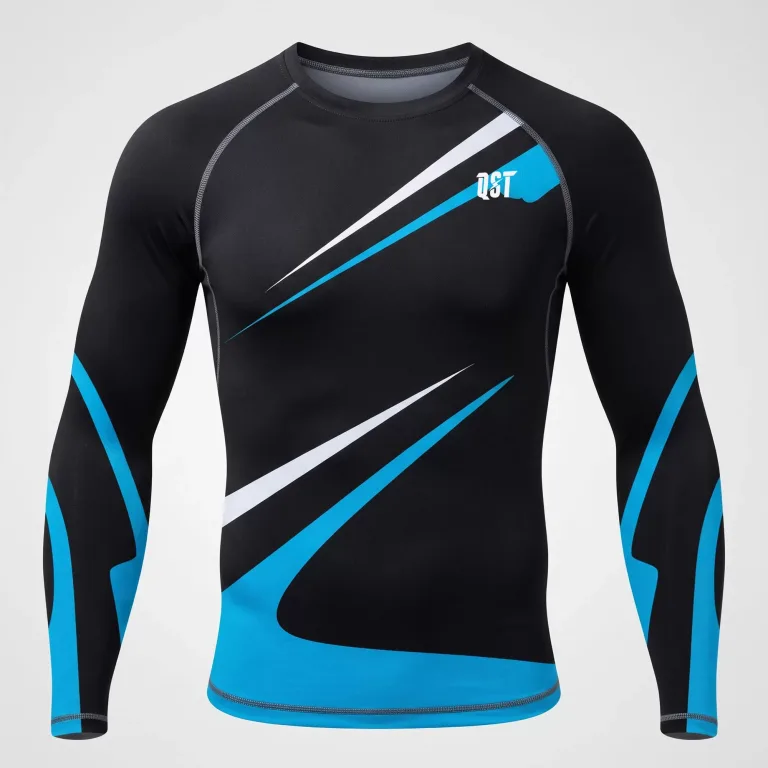
A good rash guard is a tight polyester and spandex top, often around 80/20, with flatlock seams and a sublimated print that will not crack. Choose long sleeves for gi-free grappling and BJJ, where arm cover matters, and short sleeves for MMA and striking, where cool, free arms matter more.
Long sleeve or short sleeve?
| Long sleeve rash guard | Short sleeve rash guard | |
|---|---|---|
| Arm cover | Full | Upper arm only |
| Mat burn protection | Higher | Lower on the forearms |
| Heat | Warmer | Cooler |
| Best for | No-gi BJJ, submission grappling | MMA, striking, warm gyms |
| IBJJF no-gi | Allowed | Allowed |
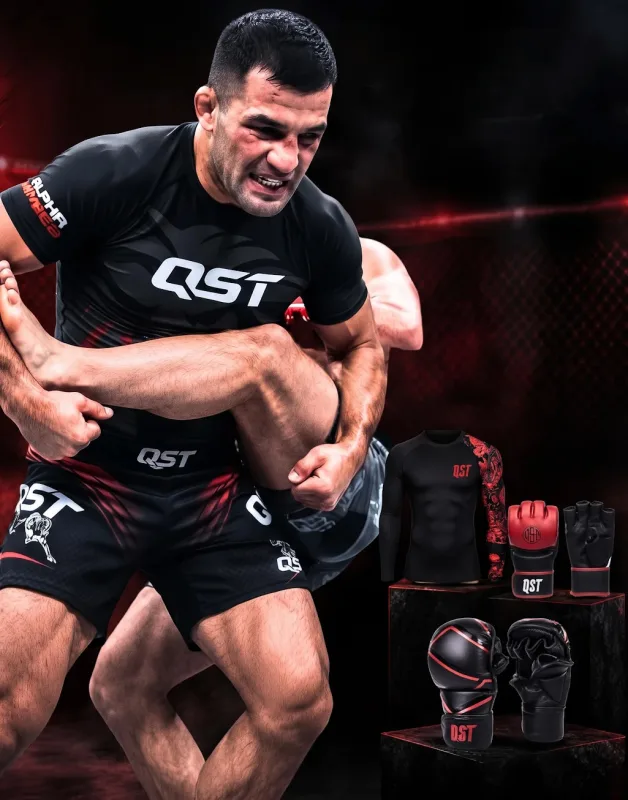
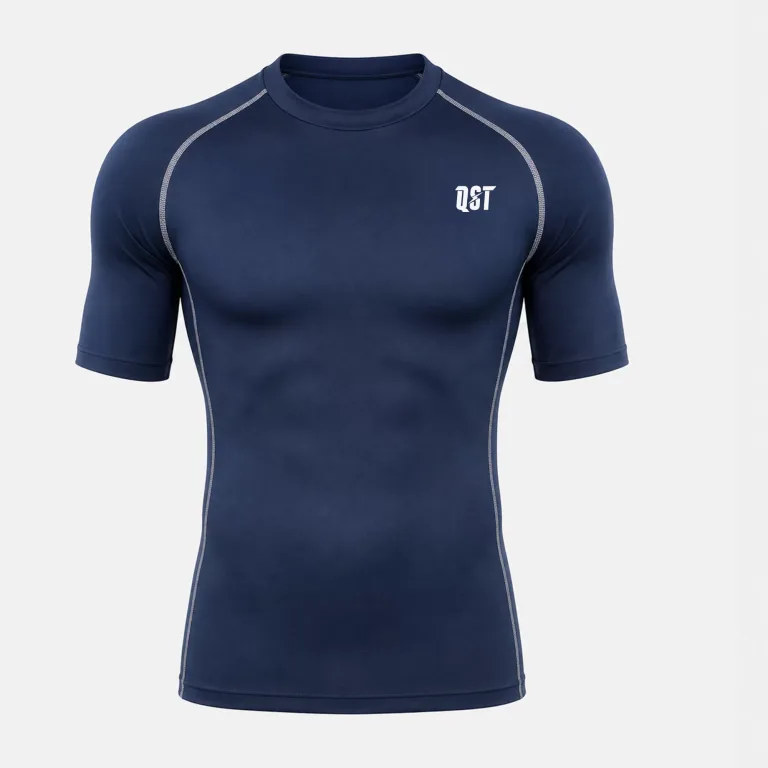
See QST’s long sleeve rash guards and short sleeve rash guards for styles already in production.
Fabric: what the numbers mean
Most rash guards are a knit of polyester and spandex. Polyester dries fast and takes sublimation ink, and spandex gives the stretch and recovery.
- Around 80/20: a common balance of compression and comfort for training and competition.
- More spandex: tighter compression and more recovery, but a higher fabric cost.
- Less spandex: a looser feel that can ride up during scrambles.
Construction details that matter
- Flatlock seams sit flat against the skin and reduce chafing.
- A close cut stops the top riding up and gives an opponent nothing to grab.
- Length should reach the waistband of the shorts.
- Dye sublimation puts the print inside the fibre, so it does not crack or peel.
IBJJF no-gi rules for rash guards
The IBJJF uniform rules ask for an elastic, skin-tight top that covers the torso down to the waistband of the shorts. The top must be black, white, or black and white, with at least 10 percent of the athlete’s belt colour. A top that is all belt colour is also allowed.
Ranked rash guards can be made to these rules, in a set of colours for each belt.
How to size a rash guard
Rash guards are sized by chest, and they should feel snug when new. Measure around the fullest part of the chest and compare it with the size chart. Between sizes, take the smaller one for competition and the larger one for everyday training.
Care
Wash cold and inside out, skip fabric softener and let the rash guard dry flat away from direct heat. Heat breaks down spandex faster than wear does.
Who makes these rash guards
QST International makes MMA gloves and fightwear to order in Sialkot, Pakistan. The facility is WRAP certified and certified to ISO 9001, ISO 14001 and ISO 45001, and it shares its ethical audit data with buyers through Sedex. The minimum order is 30 to 50 pairs or pieces per design, a sample takes 7 to 10 days, and bulk production takes 4 to 6 weeks after sample approval. Ask for a quote.
Frequently asked questions
What is a rash guard made of?
Most rash guards are a polyester and spandex knit, often around 80/20, with flatlock seams.
Should a rash guard be tight?
Yes. A rash guard should fit close to the skin so it does not ride up or give an opponent cloth to grab.
Is a rash guard IBJJF legal?
It is legal if it is tight, covers the torso to the shorts and is black, white or both with at least 10 percent of the belt colour.
Can QST print our own rash guard design?
Yes. QST sublimates your artwork across the whole garment, from 30 to 50 pieces per design.